Scaling Sustainable Forestry: FAO-Led Bamboo Reforestation Programs Transforming Kenya’s Ecosystems
Introduction: Why Bamboo Reforestation in Kenya Matters Now More Than Ever
Kenya is at a critical environmental crossroads. Rapid deforestation, land degradation, water catchment destruction, and climate change pressures are reshaping ecosystems across the country. In response, bamboo reforestation in Kenya has emerged as one of the most promising nature-based solutions for restoring degraded landscapes while supporting livelihoods.
Global institutions such as the Food and Agriculture Organization (FAO) emphasize bamboo as a powerful ecological tool due to its ability to stabilize soils, restore watersheds, and sequester carbon at high rates. Bamboo is not just a plant—it is a climate resilience infrastructure.
Across Kenya, bamboo-based restoration initiatives are gaining momentum in counties such as Nyandarua, Kiambu, Narok, Kericho, and the Mau Forest ecosystem, where degraded landscapes are being rehabilitated using bamboo as a pioneer species.
At the center of this transformation is a growing ecosystem of nurseries, farmers, and suppliers—among them, Seedlink (www.seedlink.co.ke), a leading provider of high-quality bamboo seedlings and varieties in Kenya.
1. The Global FAO Perspective on Bamboo and Forest Restoration
The FAO recognizes bamboo as a key non-wood forest resource with exceptional environmental benefits.
According to FAO forestry research, bamboo plays a crucial role in:
- Soil stabilization and erosion control
- Watershed and riverbank protection
- Carbon sequestration and climate mitigation
- Rapid land restoration in degraded ecosystems
Unlike traditional trees, bamboo grows rapidly, regenerates after harvesting, and establishes dense root systems that bind soil together—making it ideal for ecosystem recovery projects.
FAO-aligned forestry programs globally increasingly integrate bamboo into sustainable forest management frameworks due to its scalability and resilience.
2. Bamboo Reforestation in Kenya: A Growing Green Revolution
Kenya has been actively adopting bamboo as part of its national reforestation and restoration strategy.
In degraded areas such as the Mau Forest complex, bamboo plantations have been used to:
- Restore forest cover
- Stabilize steep slopes
- Rehabilitate riverbanks
- Reduce pressure on indigenous forests
Government-linked agencies and regional authorities have implemented bamboo planting programs aimed at reclaiming degraded lands and improving water catchment health. For example, bamboo is widely used in catchment restoration and commercial forestry projects across several counties.
These initiatives show that bamboo is not just ecological—it is also becoming economically strategic for Kenya’s green economy.
3. Why Bamboo is Ideal for Ecosystem Restoration in Kenya
Bamboo offers a unique combination of ecological and economic advantages that make it superior for reforestation programs:
a) Rapid Growth Rate
Bamboo grows significantly faster than most trees, allowing land restoration within a shorter time frame.
b) Soil Protection and Erosion Control
Its dense root network binds soil effectively, making it ideal for:
- Riverbanks
- Slopes
- Flood-prone areas
c) Carbon Sequestration
Bamboo absorbs large amounts of CO₂, making it a strong climate mitigation tool.
d) Renewable Harvesting
Unlike trees, bamboo regenerates after harvesting, making it a continuous resource system.
e) Economic Value
Bamboo supports multiple industries:
- Furniture production
- Construction materials
- Paper and textiles
- Handicrafts
- Bioenergy
4. Kenya’s Ecosystem Challenges and the Role of Bamboo
Kenya faces increasing pressure from:
- Deforestation
- Agricultural expansion
- Overgrazing
- Climate variability
- Water catchment degradation
These challenges have led to declining forest cover and increased soil erosion in many regions.
Bamboo reforestation addresses these issues by:
- Restoring degraded land quickly
- Protecting river systems
- Providing alternative livelihoods
- Reducing reliance on indigenous forests
In riparian ecosystems, bamboo is especially effective at preventing riverbank collapse and improving water retention capacity.
5. FAO-Led and Aligned Bamboo Reforestation Approaches in Kenya
While FAO does not implement all projects directly, it provides the global framework and technical guidance that influences bamboo restoration programs in Kenya.
Key FAO-aligned approaches include:
a) Sustainable Forest Management
Integrating bamboo into forest restoration plans to improve ecosystem resilience.
b) Agroforestry Systems
Combining bamboo with crops and trees to increase land productivity.
c) Community-Based Forestry
Engaging local communities in bamboo propagation and management.
d) Value Chain Development
Promoting bamboo as a commercial product to support rural economies.
These approaches ensure bamboo reforestation is not just environmental, but also economically sustainable and community-driven.
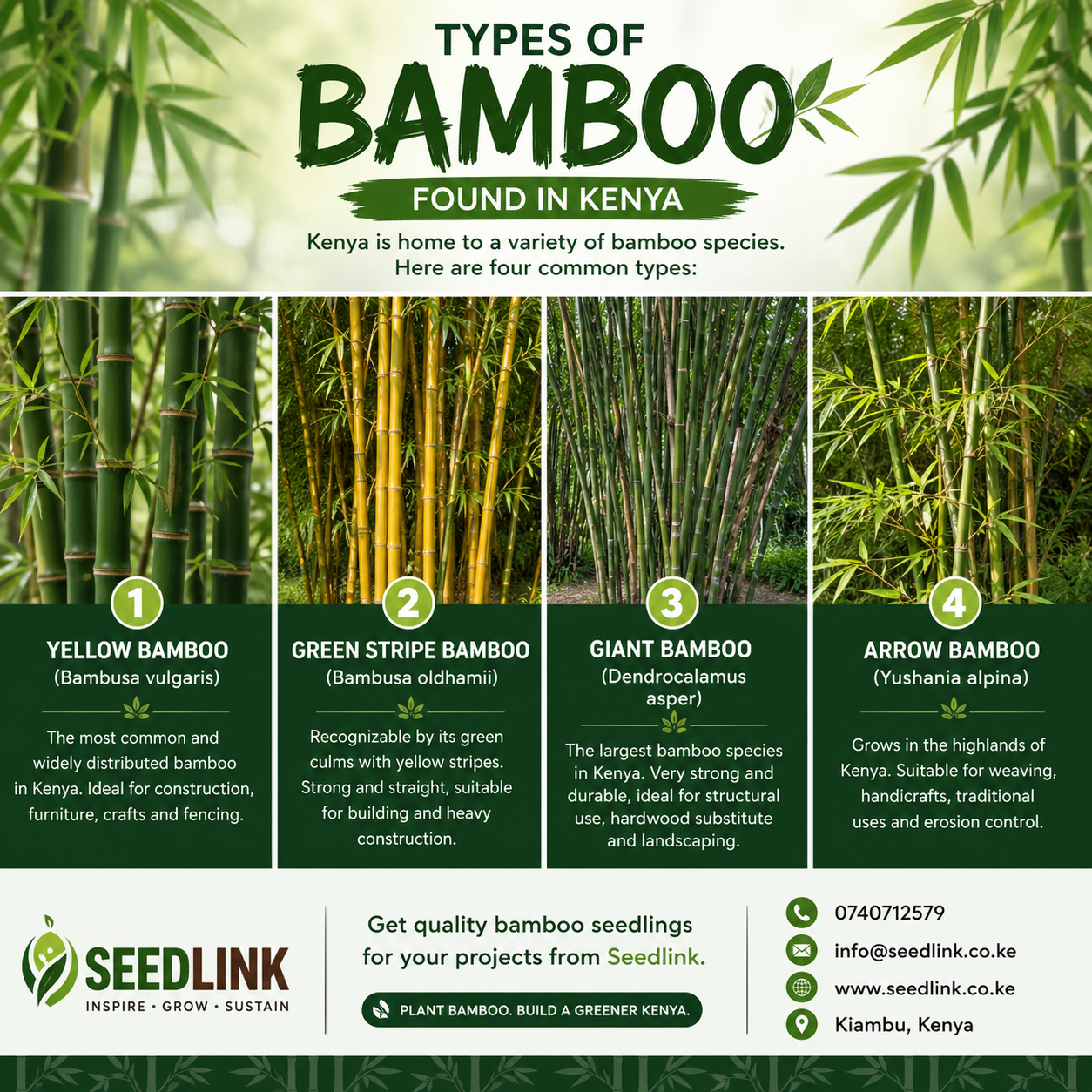
6. Bamboo Species Suitable for Kenya’s Conditions
Kenya hosts a variety of bamboo species suited for different ecological zones. Some commonly used varieties include:
- Yushania alpina (African highland bamboo)
- Bambusa vulgaris
- Dendrocalamus asper
- Dendrocalamus giganteus
- Clumping bamboo varieties for controlled growth
Selecting the right species is critical for success, depending on:
- Rainfall levels
- Soil type
- Altitude
- Intended use (timber, conservation, or commercial production)
7. Seedlink: Kenya’s Trusted Bamboo Seedling Partner
Successful bamboo reforestation begins with high-quality planting material.
This is where Seedlink (www.seedlink.co.ke) plays a crucial role in Kenya’s green transformation.
Seedlink is a leading supplier of:
- Bamboo seedlings (multiple varieties)
- Agroforestry tree seedlings
- Reforestation planting materials
- Climate-smart forestry inputs
Why Seedlink is the preferred choice for bamboo reforestation in Kenya:
- Reliable and healthy seedlings
- Wide variety of bamboo species
- Support for large-scale reforestation projects
- Expert guidance on planting and propagation
- Accessibility for farmers, NGOs, and institutions
Whether you are restoring degraded land, starting a bamboo farm, or implementing a conservation project, Seedlink provides the foundation for successful bamboo establishment.
📞 Contact Seedlink:
0740 712 579
🌐 Website:
www.seedlink.co.ke
8. Economic Opportunities from Bamboo Reforestation
Beyond environmental restoration, bamboo creates a strong green economy value chain in Kenya:
a) Construction Industry
Bamboo is increasingly used as:
- Roofing material
- Scaffolding
- Flooring
- Housing structures
b) Furniture Production
High demand for eco-friendly furniture is driving bamboo craftsmanship.
c) Energy Production
Bamboo can be processed into bioenergy and charcoal alternatives.
d) Employment Creation
From nurseries to processing units, bamboo creates rural jobs.
e) Export Markets
Global demand for bamboo products is rising, opening export opportunities for Kenya.
9. Challenges Facing Bamboo Reforestation in Kenya
Despite its benefits, bamboo expansion faces several challenges:
- Limited awareness among farmers
- Poor seedling quality from unverified sources
- Lack of processing infrastructure
- Market development gaps
- Policy implementation inconsistencies
Addressing these challenges requires collaboration between government, private sector players like Seedlink, and international partners such as FAO.
10. The Future of Bamboo Reforestation in Kenya
The future of bamboo in Kenya is strongly tied to:
- Climate change adaptation strategies
- National forest restoration goals
- Carbon credit markets
- Sustainable land use planning
With increasing investment and awareness, bamboo is set to become a cornerstone of Kenya’s reforestation and green economy strategy.
From degraded highlands to river catchments and urban greening projects, bamboo will continue to reshape Kenya’s ecological landscape.
Conclusion: Bamboo is Kenya’s Natural Climate Solution
Bamboo reforestation in Kenya is more than a conservation effort—it is a multi-dimensional solution addressing climate change, poverty, land degradation, and economic development simultaneously.
With FAO-aligned forestry frameworks supporting sustainable restoration and trusted suppliers like Seedlink (www.seedlink.co.ke) providing quality planting materials, Kenya is well-positioned to lead Africa’s bamboo revolution.
The future of forestry in Kenya is green, scalable, and deeply rooted in bamboo.
Call to Action
Ready to start your bamboo reforestation project?
👉 Visit:
www.seedlink.co.ke
📞 Call:
0740 712 579
Transform your land. Restore ecosystems. Build a greener Kenya.